The people and place
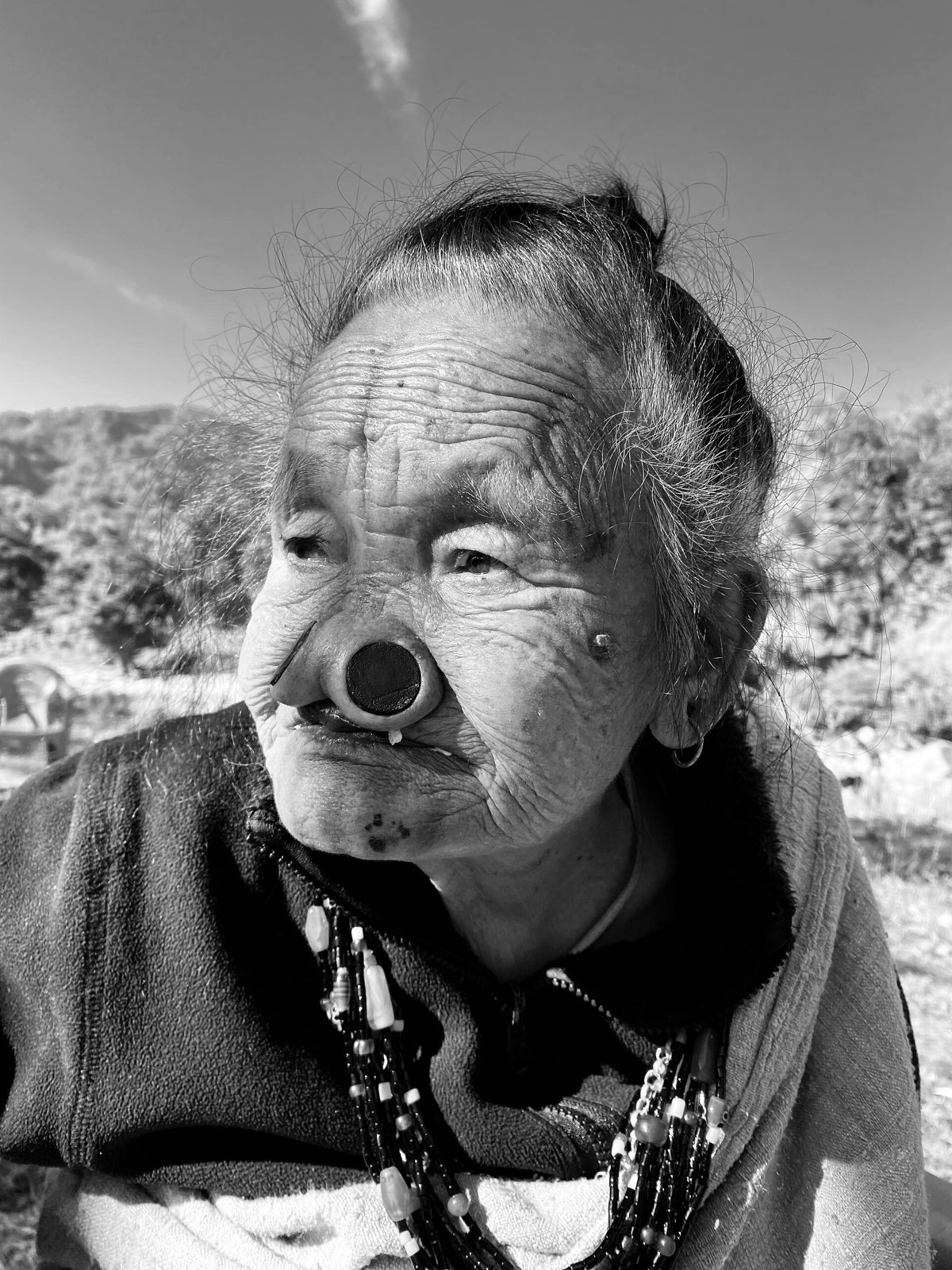
The Apatani live in the Ziro Valley of Lower Subansiri district, known for wet-rice cultivation and long-established village councils. Facial tattoos for women were paired with large cane nose plugs, called yaping hullo.
The tiipe
Girls were usually tattooed around the age of ten by older women in the community. The women’s tattoo, tiipe, consisted of a vertical line from the forehead to the tip of the nose and several vertical lines below the lower lip. Men could also receive a smaller chin mark.
Why the marks were made
A widely repeated explanation holds that tattoos and nose plugs made Apatani women less attractive to raiders from neighbouring groups. Some community members and researchers question this story as a later rationalisation. Other explanations emphasise identity, beauty and recognition among the Apatani themselves. The archive keeps these readings in view rather than choosing one.
Continuity and change
The practice was discouraged by the community and the state from the early 1970s. Studies from IIT Guwahati and others describe how the women who still carry the marks face stigma and practical barriers outside the valley. Their faces have become emblems of Arunachal Pradesh in tourism, while the women themselves are rarely asked to speak for the tradition.